Friday, October 25, 2013

Android World Update # Google Offering 25-50 GBs Of Google Drive Space On Select HTC Devices

Android News, Rumours, and Updates
The latest in android news, rumours, and updates, including device news and apps! 
Want free Kindle ebooks?

Sign up to receive the best freebie Kindle ebook deals in your email every day.
From our sponsors
Google Offering 25-50 GBs Of Google Drive Space On Select HTC Devices
Oct 25th 2013, 15:35, by Joe Sirianni

HTC_One_Max_Leaked_Images_02_01

It would seem the war on free cloud storage has begun and Google is trying to take the lead passing Dropbox on the inside lane. The popular search giant is now offering, for eligible HTC devices (primarily the One and One Max) the ability to snatch a whopping 25-50 GB’s of space on Google Drive for two years. The 50 GB’s is good for all One Max versions out there however, it’s a little confusing when it comes to the regular One’s offerings.

It’s been noted that when the HTC One upgrades to Sense 5.5 (as we’ve seen yesterday with the international version) both the Drive application and BlinkFeed should notify you and could possibly show an upgrade offering to 40 GBs (15 GB’s default + 25 GB’s of free storage). google-driveIn addition, it’s being reported that this excludes the developer edition of the One for now nor does it allow you to get the upgrade with an unlocked bootloader. If you’re looking to bank on the offer, it’s good until January 1, 2016 so you should have plenty of time, especially if you’re thinking of upgrading to a new HTC device in the next several months or more.

source: Google


Come comment on this article: Google Offering 25-50 GBs Of Google Drive Space On Select HTC Devices

You are receiving this email because you subscribed to this feed at blogtrottr.com.

If you no longer wish to receive these emails, you can unsubscribe from this feed, or manage all your subscriptions

Android World Update # Amazon offering six titles as part of Free App promo for October 25

AndroidGuys
Android news and opinion 
Manage your social media

Best social media tool for image publishing to Facebook and Twitter. Look amazing and delight your followers. Get 40% off when you sign up today.
From our sponsors
Amazon offering six titles as part of Free App promo for October 25
Oct 25th 2013, 14:49, by Scott Webster

Amazon is offering six Android apps/games for free today instead of the normal single title. The half dozen is actually a pretty good selection of popular and quality apps, not just a few grabbed from the bargain bin. With a total estimated value of around $24, the six apps also come with a bonus 20 Amazon Coins credited to your account.

The complete list of apps in the "Kindle hits" bundle includes:

The post Amazon offering six titles as part of Free App promo for October 25 appeared first on AndroidGuys.

You are receiving this email because you subscribed to this feed at blogtrottr.com.

If you no longer wish to receive these emails, you can unsubscribe from this feed, or manage all your subscriptions

Android World Update # You can now build your custom Moto X for $99 at AT&T

Phandroid
Android Phone News, Rumors, Reviews, Apps, Forums & More! 
Thousands of Free eBooks

BookBub brings you free & bargain national bestselling eBooks in the genres of your choice! Sign up now & join 1.5 million happy readers.
From our sponsors
You can now build your custom Moto X for $99 at AT&T
Oct 25th 2013, 15:25, by Kevin Krause

Motorola Moto X Boot animation DSC00738

Moto Maker has yet to debut for carriers outside of AT&T, but the price of snagging a made-to-order Moto X just dropped by $100. The carrier has reduced the price for the Moto X (16GB) to $99 across the board, including custom orders through Motorola's site. The 32GB model has also dropped an equal amount to $149. Sprint and US Cellular are also offering the handset at the reduced price as of today.

Pricing for the Moto X is expected to come down at other carriers, as well, in the coming months, but there is still no sign of the budget-priced model that has been rumored for some time. The idea of an off-contract Moto X price at a low cost would make an appealing option for some, and  recently uncovered Moto G trademark could hint at that device.

Perhaps the bigger question is when, exactly, will other carriers gain access to Moto Maker. Initially, it sounded like AT&T's exclusivity would be short lived. Have plans been scrapped to expand the Moto Maker program based on a lack of interest? Will the debut of custom Moto X handsets on other carriers come as too little, too late?

[via Moto Maker]

You are receiving this email because you subscribed to this feed at blogtrottr.com.

If you no longer wish to receive these emails, you can unsubscribe from this feed, or manage all your subscriptions

Android World Update # The rise of Android’s biggest OEM: The Samsung story

Android Authority
Android News, Reviews, How To 
Learn Adobe Illustrator CS6 Master Techniques from an Adobe Guru!

With over 25 years of experience teaching, Robert Farrell has been a trusted instructor for individuals and companies who want to improve their Adobe skills.
From our sponsors
thumbnail The rise of Android's biggest OEM: The Samsung story
Oct 25th 2013, 13:54, by Simon Hill

Samsung

It has been 75 years since Lee Byung-Chull founded Samsung with just 30,000 won (about $28). It would be fair to say that the South Korean company has come a long way since then. In the third quarter of this year Samsung cleared an operating profit of 8.12 trillion won (around $7.4 billion). Much of that profit derives from Samsung's position as the number one smartphone manufacturer in the world with a market share north of 30%.

The story of the rise of Samsung is intertwined with the rise of the Android platform. The world's most popular mobile OS is pushing for an 80% share of the market and Samsung manufactures around 40% of all Android smartphones.

The Galaxy brand looks unassailably strong. Samsung's marketing machine is formidable and the company leaves no rock unturned in the race to cover every form factor and be first to market with new cutting edge technology. Recent unveilings, after a heavy investment in R&D, suggests the company is determined to shake off the copycat allegations and prove it is a real innovator. Samsung wants to get comfortable at the top, but just how did the company become Android's biggest OEM?

In the beginning

Samsung started out in 1938 as a trading company exporting fish and vegetables to China. It grew over the decades and spread its tentacles into a number of other businesses like textiles and insurance, but it wouldn't start on the electronics path that would eventually lead to its domination of the smartphone market until the late 1960s.

In 1970 Samsung's first black-and-white TV went on sale. The following decade saw the company expand into heavy industry, and it began manufacturing washing machines, refrigerators, and microwave ovens. By the 1980s Samsung was focused on electronics and it had a telecommunications wing which started with switchboards and fax machines, before moving into mobile with a car phone in 1986.

The king is dead, long live the king

When Lee Byung-Chull died in 1987 his son, Lee Kun-hee, took over. He was to transform the company beyond recognition, but his 26-year reign has not been without controversy, as The Verge has pointed out.

Lee_Kun-hee

Samsung began to produce mobile phones in the late 80's after investing in ten Motorola mobile phones for benchmarking. The first mobile phone it produced was the SH-100, but the quality was very poor. In fact the quality issue was company-wide and Lee soon moved to modernize Samsung and change its ethos. In 1993 he famously commanded his employees to "change everything but your wife and kids".

The new emphasis on quality was neatly summed up by the SH-700 which was a new, lighter, more compact design than Samsung's previous cell phones. Every handset off the line was thoroughly tested and Lee showed his determination to improve Samsung's reputation by burning faulty handsets worth 15 billion won. The new "Quality is Pride" motto was to be taken seriously.

First mobile success

In October 1994 Samsung released the SH-770 under the brand name "Anycall". This improved version of the SH-700 was backed by a serious marketing campaign and a charm offensive on distributors. Within a year Samsung had eaten Motorola's South Korean market share and become the biggest mobile phone manufacturer in its homeland.

The Samsung SCH-100 and SH-770 at the Samsung museum.

Mobil The Samsung SCH-100 and SH-770 at the Samsung museum.

As CDMA service launched in 1996 Samsung was ready to capitalize with its first digital handset, the SCH-100. The same year Samsung signed an exclusive agreement with Sprint to provide phones for the U.S. market and this sparked an international assault by the company. By the late 90's Samsung was going up against Nokia, Motorola, and Ericsson in Europe. By 2005 Samsung was the third largest mobile phone manufacturer in the world behind Nokia and Motorola. It claimed second place in 2007, but it would be 2012 before it would claim the number one spot.

Smartphone revolution

It took a while for smartphones to come down in price and capture the public's imagination, but when they caught on they really caught on. Samsung did develop its own smartphone platform; Bada OS was announced in late 2009, but the company had already released its first Android smartphone, the i7500, or Samsung Galaxy, in June of that year. Success was far from instantaneous, but it soon became clear where Samsung's future lay and Bada was quietly ditched.

Samsung i7500 Galaxy for O2

Samsung i7500 Galaxy for O2

The Samsung Galaxy S was announced in March 2010 and went on sale in June. Samsung has sold more than 25 million Galaxy S handsets since then. The original boasted a 4-inch Super AMOLED capacitive touchscreen display, a 1GHz ARM Hummingbird processor, 512MB of RAM, and a 5MP camera. It wasn't a world beater, but it certainly didn't look out of place at the cutting edge of the Android charge.

Samsung bent over backwards to cater for the U.S. carriers and while all the variants (Vibrant, Captivate, Epic, Fascinate, and Mesmerize) may not have helped Samsung's brand image with consumers, they did build bridges with distributors.

Samsung wins

Before long Samsung's triple pronged approach of quality hardware, marketing muscle, and good distributor relations, was paying dividends. The Galaxy S2 was released in May 2011 and it was jaw-droppingly good. The 1.2GHz dual-core processor, 1GB of RAM, 4.3-inch display, and 8MP camera met with widespread acclaim. It was a big contender for best smartphone on the market. Sales were strong and Samsung has shifted over 40 million S2 handsets to date.

samsung galaxy s2

Filling in the gaps between Samsung's flagship Galaxy S series was a tidal wave of cheaper Android smartphones and experiments with new form factors, most notably the Galaxy Note series which seems to have kicked the phablet category into gear.

In the first quarter of 2012 Samsung finally overtook Nokia to become the world's largest mobile phone maker by sales. It was a great start to the year and things were only going to get better with the release of Samsung's most successful Android smartphone so far in May. The Samsung Galaxy S3 boasted a 4.8-inch 720p display, a 1.4GHz quad-core processor (1.5 GHz dual-core in the U.S.), 1GB or 2GB of RAM, and an 8MP camera. It has deservedly sold more than 50 million units (10 million in the first three months on sale). Cutting edge specs and interesting software features, combined with a serious marketing push, and strong branding put the "latest Galaxy" alongside the iPhone in terms of desirability.

galaxy-s3-sales-samsung-ces-2013-1

Amidst its greatest success Samsung was pulled back down to earth by Apple's $1 billion patent case win. This looked like an indictment of the company's supposed Achilles' heel. Analysts have long leveled the same complaint at Samsung, namely that it knows how to dominate an existing market by analyzing the leaders and beating them at their own game, but it has no idea how to truly innovate.

Copycat, copycat

You could argue that human advancement itself is a story of taking what works and building upon it to improve things. There's no room here for an in-depth analysis of the patent wars in the smartphone market, suffice to say that many lines of human endeavor are not subjected to the same claims of ownership (though many are). The basic truth remains that only the most determined Samsung apologist could overlook its policy of copying the competition.

apple-samsung-patent-claims

The company started out analyzing Motorola and trying to best it. Samsung's focus on Nokia nearly led it down a dead end. Nokia's continuing hold on the number one spot masked its overreliance on the dying feature phone market. Documents that emerged during the Apple case revealed that Samsung execs felt there was a "crisis of design" at the company and there was a realization that it should be competing with Apple not Nokia. That led to a concerted effort to beat Apple, which began with analyzing, and sometimes copying, what was good about the Apple experience.

It's possible to sneer at Samsung for being derivative, and many people do, but no company grows this successful without delivering a good product to its customers. It's also a perfectly legitimate approach in many industries which is why Samsung executive vice president, Kim Hyun-suk had no qualms about telling the New York Times, "We get most of our ideas from the market. The market is a driver, so we don't intend to drive the market in a certain direction."

Leading the field

With 2013 nearly at an end we can see evidence that Samsung is adjusting to its new found status as a leader. The gap has arguably narrowed as the S4 is not streets ahead in hardware terms compared to the rest of the Android flagship pack. Samsung clearly tried to add value with its software features, but any drive towards its own ecosystem is going to clash with Google's services and they're part of what makes Android so great. The Note 3 is more clearly the best device in its category, but the phablet wars have only just begun and we're seeing a lot of new releases that will compete.

Galaxy Gear Note 3 find my device

Samsung's more interesting moves, in the shape of the Galaxy Gear smartwatch, and the Galaxy Round, aren't looking too impressive. The Galaxy Gear is horribly limited and it's no surprise the reviews are not glowing. There's no substantial improvement on what Sony and others have already done in this space. The Galaxy Round looks like a determined effort to announce a flexible display device before LG. The benefits of its design are far from clear and the news that it will be a limited release to test the market can only dampen any potential excitement.

Before we get too negative let's point out that Samsung is seriously outspending the competition on research and development. It spent $10.6 billion in 2012, compared to Apple's $3.4 billion. It will take time for that investment to bear fruit and the company has a lot of work to do to change the mindset that has served it so well. The fact it is spending this much on R&D suggests awareness that staying on top requires true innovation. Only time will tell if Samsung can transition to pacesetter and make that number one spot its own for the long term.

You are receiving this email because you subscribed to this feed at blogtrottr.com.

If you no longer wish to receive these emails, you can unsubscribe from this feed, or manage all your subscriptions

Android World Update # Sony Xperia Z1 vs Sony Xperia Z

Android Authority
Android News, Reviews, How To 
Photoshop - Beauty Retouching

Learn how to improve your photoshop retouching skill and knowledge in 21 easy techniques! Take this course for just $25.
From our sponsors
thumbnail Sony Xperia Z1 vs Sony Xperia Z
Oct 25th 2013, 13:55, by Joshua Vergara

Sony has come a long way in the past couple of years, turning into a highly focused company that relies on exquisite design to differentiate its products.

The Xperia Z, released in early 2013, was Sony's comeback announcement, but the Xperia Z1 is the phone that really positions Sony as a top phone maker. At first glance, the differences between the Z and the Z1 are not that substantial, especially if you don't follow Sony closely. But the two phones are distinct in many aspects that we will go through in our Xperia Z1 vs Xperia Z comparison.

We take a look at all the things that matter, from the industrial design, to the display, specifications, and software. Let's dive in.

Design and build quality

The Z1 is an evolutionary upgrade over the Xperia Z, sharing all the design traits that Sony has used throughout its product lineup this year. Some users might even confuse one device for the other, though the bigger footprint gives the Z1 away, once you put them side by side.

Sony Xperia Z1 vs Zperia Z aa 19

The Sony Xperia Z was among the first devices to feature the OmniBalance design philosophy, which entails a minimalist, symmetrical, and angular aspect, highlighted with metallic accents, such as the now iconic silver power button. The Z is also resistant to water and dust, thanks to the plastic flaps that cover its ports. They might not be an elegant solution, but the flaps are durable and they get the job done. For a phone of its size, the Xperia Z is reasonably lightweight and easy to handle.

Sony Xperia Z1 vs Zperia Z aa 3

In the opposite corner, the Xperia Z1 feels like a more mature version of the Z, that is not only larger and heftier, but also more refined in terms of design. Featuring a metal frame instead of the plastic on the Z, but the same slate look, the Xperia Z1 feels sleeker and more solid than its older brother. The heft gives it a premium feel, but it may also make it unwieldy for some users. This is a large and heavy phone, but its handling is slightly improved by the subtle curvature of its metallic frame, which makes it nicer to hold. The buttons are in the same position as on the Xperia Z, but the Z1 gains a two-stage camera button, which is important for a phone whose main selling point is the high-quality camera.

Sony Xperia Z1 vs Zperia Z aa 6

To wrap up, the Xperia Z1 is definitely the more refined device, but the Xperia Z is not a clunky phone by any means.

Display

Right of the bat, you'll notice the rather large bezels surrounding the displays of both screens. The slimmer bezels on some competing devices make Sony's phones look a bit dated, but that probably won't matter for many customers.

Sony Xperia Z1 vs Zperia Z aa 25

The Xperia Z's Full HD screen is very crisp, at 441 ppi, and looks great head on, though the image quality plummets when you look at the phone from an angle. It's one of the phone's biggest downsides, though some people are not that bothered by it.

Sony Xperia Z1 vs Zperia Z aa 15

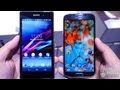
On the Xperia Z1, Sony kept the same general characteristics – 5-inch, Full HD, TFT LCD – but improved the general quality of the image and the viewing angles. The difference is immediately visible when you put the two phones side by side – the black on the Xperia Z1 is deeper and colors are more intense, thanks to the use of Triluminos, a technology that enables LCD screens to display a richer color gamut.

Sony Xperia Z1 vs Zperia Z aa 12

The viewing angles are still not as good as they could be on the Xperia Z1, but they are certainly better than on its predecessor. Then, there's the minor problem of the LCD backlight bleeding around the panel's edges. These qualms aside, the Sony Xperia Z1's display is beautiful and the dark tones of Timescape UI really complement it.

Hardware and performance

Back when the Xperia Z was released, some have criticized Sony for opting for a processor that was already on its way out, the Snapdragon S4 Pro. Clocked at 1.5GHz and packing an Adreno 320 GPU, the S4 Pro processor does its job satisfactorily, helped in part by the modest requirements of the mostly bloat-free Timescape UI. Overall, the Xperia Z is a decently performing phone, but it's nowhere nearly as future-proof as the new Z1.

Sony Xperia Z1 vs Zperia Z aa 11

Swapping the S4 Pro for the latest and greatest from Qualcomm, the Snapdragon 800, greatly improves the smoothness of the Xperia Z1. You get faster clock speeds and a new and improved GPU in the Adreno 330, and the immediate result is the lag-free operation of the Z1. Everything is silky smooth, from the user interface to the apps, except for a few cases when background operations seem to cause delays, though that's not Sony's fault. Looking forward, the Snapdragon 800 will keep the Xperia Z1 performing adequately for at least a couple of years.

Besides the different processors, the Xperia Z1 and the Xperia Z feature mostly the same hardware. One big difference is the larger battery on the Z1 (3000 mAh vs 2300 mAh), which can take you through a full day of work without breaking a sweat. Disappointingly, Sony chose not to equip either of these devices with features that made it to other devices in its lineup, such as the ability to use various objects as a stylus, which we liked on the Xperia Z Ultra.

Sony Xperia Z1 vs Zperia Z aa 20

Camera

Until now, the Xperia Z1 proved superior to the Xperia Z, but never dramatically so. That changes with the camera, which is great on the new Z1, compared to the nice-but-not-great shooter on the Z.

To be clear, the Xperia Z's 13MP camera is not a bad performer, but it's not something to praise as a defining  feature either. It takes decent images, and Sony's well-known Superior Mode is great for those who don't like to fiddle with settings to get a nice picture. The manual mode unlocks a few more options, but the Z's camera app is generally simplistic. The areas where picture quality lags behind are low-light image taking and color reproduction, which is off in some cases.

Sony Xperia Z1 vs Zperia Z aa 22

Sony invested a lot of time and resources in perfecting the camera software and hardware on the Xperia Z1, starting with the 20.7MP sensor. The sensor is larger than on most smartphone cameras, but it's not just about the size. The picture quality and color reproduction are improved compared to the Z, and any shot that benefits from good light is almost guaranteed to turn out great. Low light shots are pretty good too, but we think the noise reduction algorithm reduces too much detail from darker spots.

Sony Xperia Z1 vs Zperia Z aa 24

There are some issues though – one is the fact that you can only use the 16:9 format at a resolution of 8MP, which is a shame. Then there's the slight smudgy look of areas that are outside the focal point, that makes poorly focused images even more unattractive.

Sony Xperia Z1 vs Zperia Z aa 23

Sony spruced up the camera app a bit with add-on support and some new features, such as the ability to post an image directly to Facebook.

Software

Because Sony didn't make major changes between the two generations, there isn't much to say about the software differences between the Xperia Z1 and the Xperia Z. You get the same clean, minimalist interface on both phones, and the user experience in basically the same.

Sony Xperia Z1 vs Zperia Z aa 28

Unlike some competitors, Sony remained close to the stock roots of Android, and the changes it did operate are unobtrusive. Of course, Sony's media apps such as Walkman are front and center, but they don't get in the way if you don't like them. Small Apps, simple apps that you can open as overlays on the screen, give you a basic level of multitasking, a nice addition to stock Android.

Sony Xperia Z1 vs Zperia Z aa 25

Price

Sony currently focuses on Asia and Europe as its main markets, and for this reason, the availability of the Xperia Z and Z1 in the United States is limited. Currently, you can acquire the Xperia Z from T-Mobile for $20 a month on a two-year agreement. Unlocked, the phone can be yours for a reasonable $500.

Sony Xperia Z1 vs Zperia Z aa 27

As of this writing, the Xperia Z1 hasn't been announced on any US carrier, though it's possible that T-Mobile will pick it up. The Z1 can be had for $700 unlocked, from Sony or from specialized retailers.

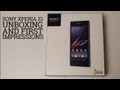
More Xperia Z1 video coverage
Final thoughts

Choosing between the Xperia Z1 and the Xperia Z shouldn't be too hard in theory. The Z1 is generally a better version of the Xperia Z, and thus delivers improvements and refinements across the board. The processing power is superior, the design is more polished, the display is better, and the camera is a marked improvement. However, the Z1 is not able to fully escape the problems that bogged down its predecessor. The display still has a slight problem with the viewing angles and the camera is still delivering inconsistent image quality.

There are two factors that might push you towards the Xperia Z: its smaller size and its smaller price. But if money is no problem for you and you don't mind the extra heft, the Xperia Z1 emerges as the clear winner.

You are receiving this email because you subscribed to this feed at blogtrottr.com.

If you no longer wish to receive these emails, you can unsubscribe from this feed, or manage all your subscriptions

Android World Update # Best Buy offering $100 off on AT&T, Sprint and Verizon handsets with new contract

Android Authority
Android News, Reviews, How To 
Learn Adobe Illustrator CS6 Master Techniques from an Adobe Guru!

With over 25 years of experience teaching, Robert Farrell has been a trusted instructor for individuals and companies who want to improve their Adobe skills.
From our sponsors
thumbnail Best Buy offering $100 off on AT&T, Sprint and Verizon handsets with new contract
Oct 25th 2013, 14:49, by Andrew Grush

Best Buy

If for whatever reason you’ve been thinking about switching carriers and picking up a new phone, you might want to check out Best Buy. Right now the electronics retailer is offering an instant $100 rebate on nearly every smartphone it has to offer, provided your willing to sign a new contract or open a new phone line. Unfortunately, the deal doesn’t extend to existing customers looking to renew a contract or for folks looking to buy outright.

The special offer applies to devices from Verizon, Sprint or AT&T and sees the Note 3 offered for just $199.99, the Samsung Galaxy S4 down to as little as $99, and the several handsets such as the HTC One and Galaxy S3 are now marked down to free. If you're looking for even more value from an ultra-high end device, the LG G2 is just $99.99 thanks to the instant rebate AND even includes a $50 Best Buy gift card.

So how long does this $100 rebate promotion last? While some of the phones don't say for sure, others are marked for ending within the next few days. In other words, if this promo sounds appealing to you we recommend moving quickly to be on the safe side.

Although all the special pricing is available online, the deal may or may not extend to all physical store locations. When in doubt, you can always call your local Best Buy and ask.

For a complete list of all the devices covered in this promotion, you'll want to head on over to Best Buy’s website.

Media files:
Best Buy
You are receiving this email because you subscribed to this feed at blogtrottr.com.

If you no longer wish to receive these emails, you can unsubscribe from this feed, or manage all your subscriptions